13 posts tagged with "robotics"

View All Tags

How to Analyze ROS Bag Files and Build a Dataset for Machine Learning

· 8 min read
Ekaterina Marova
Data Scientist - ML, Python

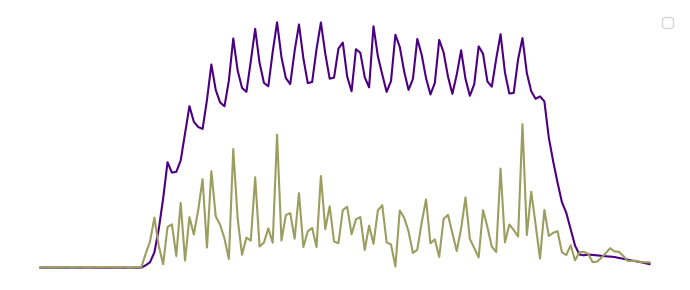
Linear and Angular Velocities over Time

Working with real-world robot data depends on how ROS (Robot Operating System) messages are stored. In the article 3 Ways to Store ROS Topics, we explored several approaches — including storing compressed Rosbag files in time-series storage and storing topics as separate records.

In this tutorial, we'll focus on the most common format: .bag files recorded with Rosbag. These files contain valuable data on how a robot interacts with the world — such as odometry, camera frames, LiDAR, or IMU readings — and provide the foundation for analyzing the robot's behavior.

You’ll learn how to:

  • Extract motion data from .bag files
  • Create basic velocity features
  • Train a classification model to recognize different types of robot movements

We'll use the bagpy library to process .bag files and apply basic machine learning techniques for classification.

Although the examples in this tutorial use data from a Boston Dynamics Spot robot (performing movements like moving forward, sideways, and rotating), you can adapt the code for your recordings.


3 Ways to Store ROS Topics

· 8 min read
Gracija Nikolovska
Software Developer - C#, Python, ROS

Introduction Diagram

The Robot Operating System (ROS) is a powerful framework for developing and managing robotic systems. It simplifies integration, communication, and development through various tools and libraries. ROS is built around a communication system that uses a publish-subscribe model to connect components, where some, like sensors or cameras, act as publishers, and others, like motors or processors, are subscribers. The data shared between these components is organized into topics.

To make the most of this data, especially when it's needed later for analysis, debugging, or sharing, it's crucial to store it efficiently. In this article, we'll dive into three methods for storing ROS topics, comparing their benefits and limitations to help you choose the best one for your needs. In case you need to gain a broader understanding of how to handle robotics data effectively, make sure to check out our article on storing and managing robotics data first.

How to Store and Manage Robotics Data

· 17 min read
Gracija Nikolovska
Software Developer - C#, Python, ROS

Introduction Diagram

Robots generate massive amounts of data that must be managed effectively. Challenges like limited on-device storage, the need for real-time processing, and high cloud storage costs make it essential to find efficient solutions. Balancing edge and cloud storage while keeping data synchronized is a key part of effective management.

This article begins by outlining these challenges and offering practical strategies, such as using time-series databases and implementing retention policies. We will then introduce ReductStore, a specialized database designed to meet the unique needs of robotic systems. With features like real-time ingestion, efficient querying with batching, smart retention policies, and edge-to-cloud replication, ReductStore offers a cost-effective and high-performance solution for storing and managing robotic data.

We’ll also explore a hand-on example where we’ll show how you can set up ReductStore and use it for storing and managing data. Finally, we will compare ReductStore with MongoDB, explaining why ReductStore is the better choice for robotics. This comprehensive guide is designed to help engineers and developers overcome the challenges of robotic data management and optimize their systems.